How to Repair Nails After Acrylics: A Step-by-Step Recovery Guide
Thin, peeling, sore or brittle nails after taking off your acrylics? That is common, and it is fixable. This guide explains what actually damages your natural nails, the exact routine that helps them recover, how long it takes, and which mistakes keep you stuck.
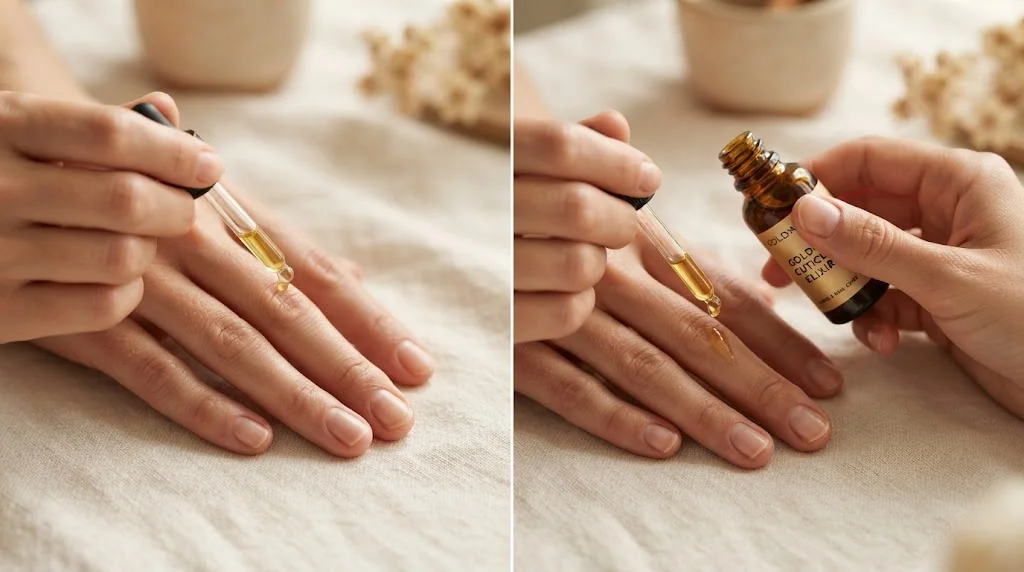
Quick answer: To repair nails after acrylics, keep them short, apply cuticle oil and moisturizer every day, protect them with gloves, stop peeling or heavy buffing, and skip new enhancements until they feel strong and flexible. Most people see less dryness in a few weeks. Full regrowth of a damaged fingernail takes roughly four to six months.
In this guide
- How to Repair Nails After Acrylics: A Step-by-Step Recovery Guide
- Why do nails feel weak and thin after acrylics?
- How to repair your nails after acrylics: 7 steps
- How long does it take for nails to recover after acrylics?
- Best products for nail recovery after acrylic removal
- 5 mistakes that slow nail recovery
- Myths vs. facts about nail recovery
- When should you see a dermatologist?
- The bottom line: let your nails heal
You expected smooth, strong nails underneath. Instead you found them thin, dry, bendy or sore. It feels How to Repair Nails After Acrylics the acrylics ruined them, but the truth is more specific than that, and more hopeful.
Your natural nail is alive at the base and keeps growing the whole time. Damage builds up at the surface, and surface damage grows out. There are no shortcuts, but a consistent routine does work.
Why do nails feel weak and thin after acrylics?
How to Repair Nails After Acrylics feel weak after acrylics because the top layers of the nail plate get thinned during prep, removal and filing, and the nail then dries out. The acrylic itself is rarely the only culprit. The damage usually comes from how the set was applied, how long it stayed on and, above all, how it came off.
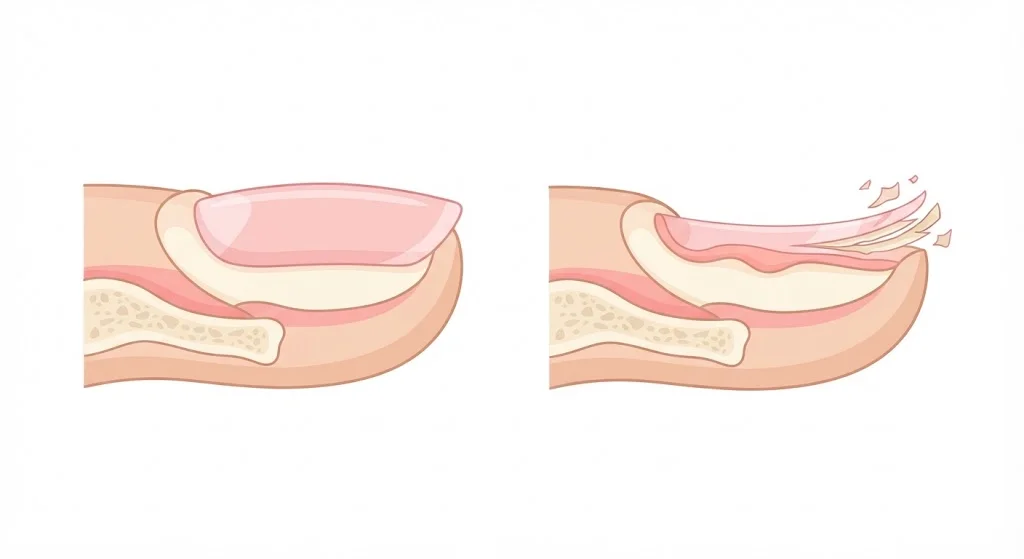
The most common causes
- Aggressive removal. Peeling, prying or pulling acrylics off strips away layers of keratin, the protein your nail plate is made of. Soaking and gentle removal is the safe route.
- Heavy filing. Roughing up the surface for adhesion and then filing away leftover product both thin the nail.
- Wearing them too long. Acrylic does not grow. Your nail grows out from underneath and leaves a gap at the base, which creates leverage, lifting and breakage. Infills every 2 to 3 weeks prevent this.
- No breaks between sets. Back-to-back applications never give the nail a chance to recover.
- Dryness. Skipping oil and moisturizer leaves nails and cuticles brittle, cracked and prone to irritation.
What you may notice after removal
- Thin, flexible nails that bend easily
- Peeling or layering at the tips
- Dryness and a rough texture
- More frequent breakage
- Sensitivity when pressing on the nail
The good news:How to Repair Nails After Acrylics your nails grow from the nail matrix, the tissue under the skin at the base. As long as the matrix is not injured, healthy new nail keeps coming.
Surface layers take the damage. The matrix keeps producing new nail.
How to repair your nails after acrylics: 7 steps
How to Repair Nails After Acrylics Small daily actions beat occasional intensive treatments. Five minutes a day is enough.
Source:https://www.aad.org/public/everyday-care/nail-care-secrets/basics/healthy-nail-tips
Step 1: Give your nails a break
Covering damaged nails with a fresh set hides the problem and delays healing. Go enhancement-free for a few weeks, ideally until the nails feel firm and look smooth. During this time:
- Keep nails short and clean.
- Avoid pressure on the tips.
- Stop using your nails as tools for prying, scraping or opening things.
- Wear gloves for dishes and cleaning.
Step 2: Apply cuticle oil every day
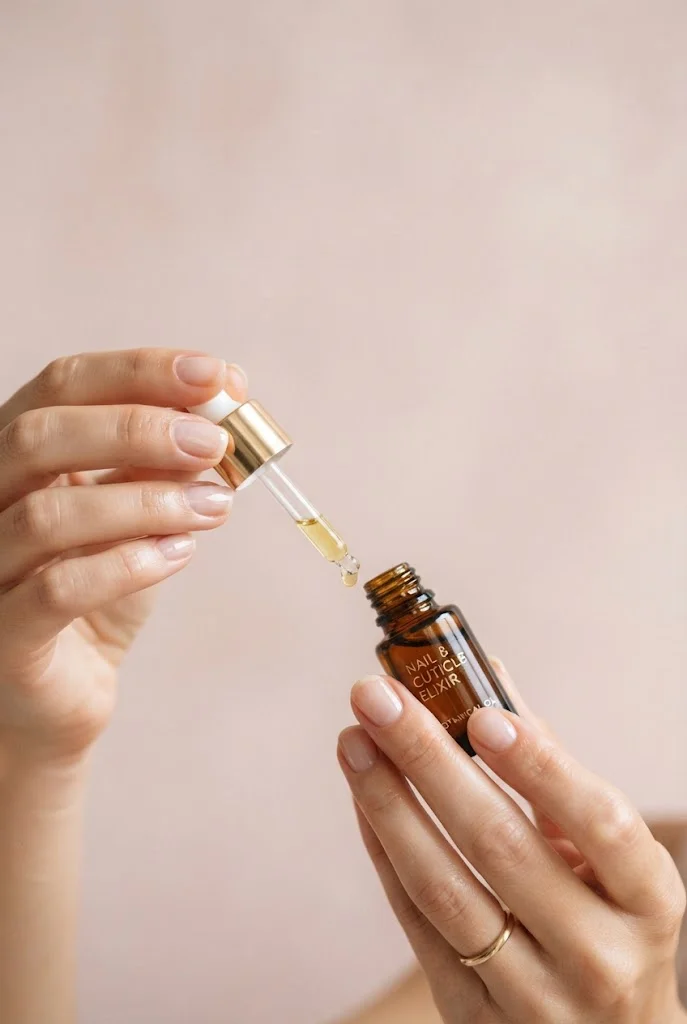
Hydration is the single biggest fix, because dryness is what makes nails peel and snap. Massage a drop of cuticle oil into each nail and the skin around it, ideally morning and before bed. Look for oils such as:
- Jojoba oil
- Vitamin E oil
- Sweet almond oil
- Coconut oil
How to Repair Nails After Acrylics The most effective method of fixing nails post acrylics is to provide regular moisture and handling. Put a little cuticle oil on the nails and skin around the nails every day to prevent dryness and brittleness. Massage for 20 seconds and then apply a hand moisturizer. Trimting your natural nails to a manageable length and managing the risk of cracks, splits and breakage as your natural nails grow can also help to reduce the risk of problems.
Step 3: Moisturize your hands and nails
Follow the oil with a rich hand cream or nail balm, especially after washing your hands. The aim is flexible, hydrated nails, not hard ones.
Step 4: Stop peeling and over-buffing
How to Repair Nails After Acrylics It is tempting to smooth rough, flaking nails, but peeling layers and buffing the surface only thins them more. Avoid peeling, heavy filing, scratching and excessive polishing. If a layer is lifting, trim the loose edge carefully with clean clippers and let new growth fill in behind it.
Step 5: Use a gentle strengthener, sparingly
If your nails remain soft and bendy, a mild strengthening treatment made for weak, thin or peeling nails can help. Pair it with moisturizer. Very stiff nails split and crack because they can no longer flex, so more is not better.
Step 6: Protect nails from daily wear
| Avoid | Do this instead |
| Opening cans or jars with your nails | Use the pad of your finger or a tool |
| Long exposure to water | Wear gloves when needed |
| Harsh cleaning chemicals | Wear protective gloves |
| Picking at damaged areas | Trim gently and file in one direction |
Step 7: Support nails from the inside
Nails are made of protein and need a balanced diet to grow well: enough protein, plus a variety of vitamins and minerals from whole foods. If you suspect a deficiency, ask a doctor before starting supplements.
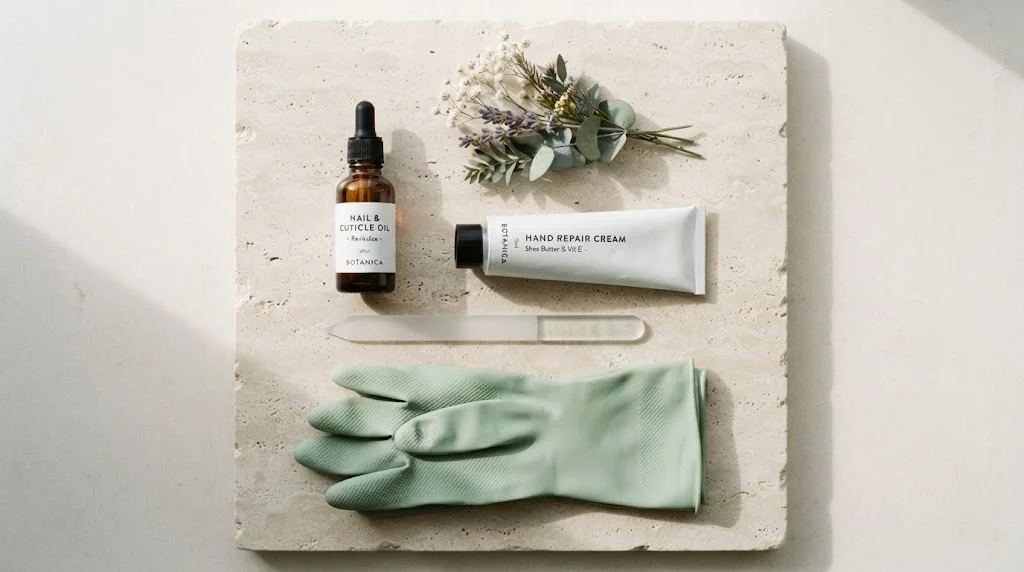
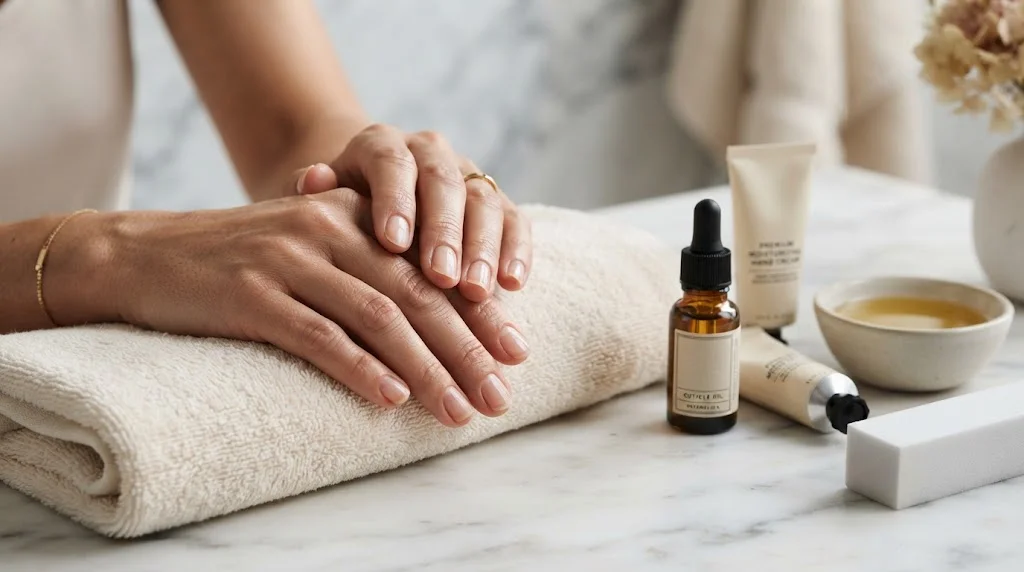
A simple kit is all you need: oil, cream, a gentle file and gloves.
How long does it take for nails to recover after acrylics?
Like products, so patience: Patience is essential for nails to heal. The ruined layers cannot be repaired, only outgrown and the real growth takes place at the base of the nail. Take a photo of your fingernails once a week or two, and you’ll see healthy, smooth growth before the damaged tips go away. How to Repair Nails After Acrylics You can expect softer skin and less peeling within a few weeks, but a fully healthy nail takes months. Fingernails grow about 3 mm per month on average, so replacing the damaged section from base to tip usually takes around four to six months. Toenails are much slower.
What changes the timeline
- How many years you wore acrylics
- How the acrylics were removed
- Your natural growth rate
- Overall health and nutrition
- How consistent your daily routine is
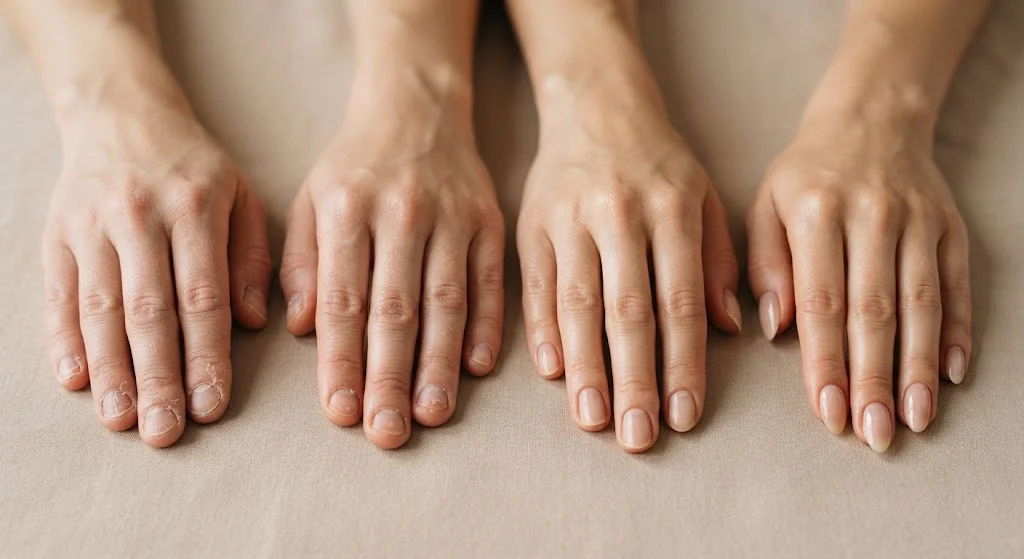
Of all of these, consistency is the one you control most.
Best products for nail recovery after acrylic removal
You do not need a shelf full of products. A basic, consistent kit works better than a complicated one.
| Product | What it does |
| Cuticle oil | Hydrates nails and surrounding skin |
| Nail moisturizer or balm | Supports dry, brittle nails |
| Glass or fine-grit file | Smooths edges without causing splits |
| Gentle nail strengthener | Adds support to thin, soft nails when used correctly |
| Hand cream | Shields hands and nails from dryness |
5 mistakes that slow nail recovery
- Putting on new acrylics immediately. The nails look better for a while, but the damaged plate never gets to recover.
- Removing acrylics by peeling or pulling. This takes layers of natural nail with it. Proper removal is slow and gentle.
- Overusing nail hardeners. Healthy nails need strength and flexibility. Rock-hard nails snap.
- Ignoring your cuticles. Cuticles seal the gap at the base of the nail and help keep bacteria out. Keep them moisturized, gently push them back after a shower, and avoid cutting them. Trim only loose hangnails.
- Inconsistent care. One big treatment a month will never beat a small daily habit.
Myths vs. facts about nail recovery
| Myth | Fact |
| Nails are never the same after acrylics. | Most nails recover well with good care and time. |
| Trimming makes nails grow faster. | Trimming prevents breakage but does not speed up growth. |
| One great product fixes everything. | Hydration and protection matter just as much as any product. |
| Acrylics always destroy nails. | Poor prep, rough removal and lack of maintenance cause most damage. |
When should you see a dermatologist?
Most post-acrylic problems settle with proper care. See a dermatologist or doctor if you notice:
- Persistent pain in the nail or surrounding skin
- Swelling, redness, warmth or pus (signs of infection)
- Nails lifting significantly from the nail bed
- Unusual colour changes such as green, dark or black areas
- Damage that keeps getting worse despite good care
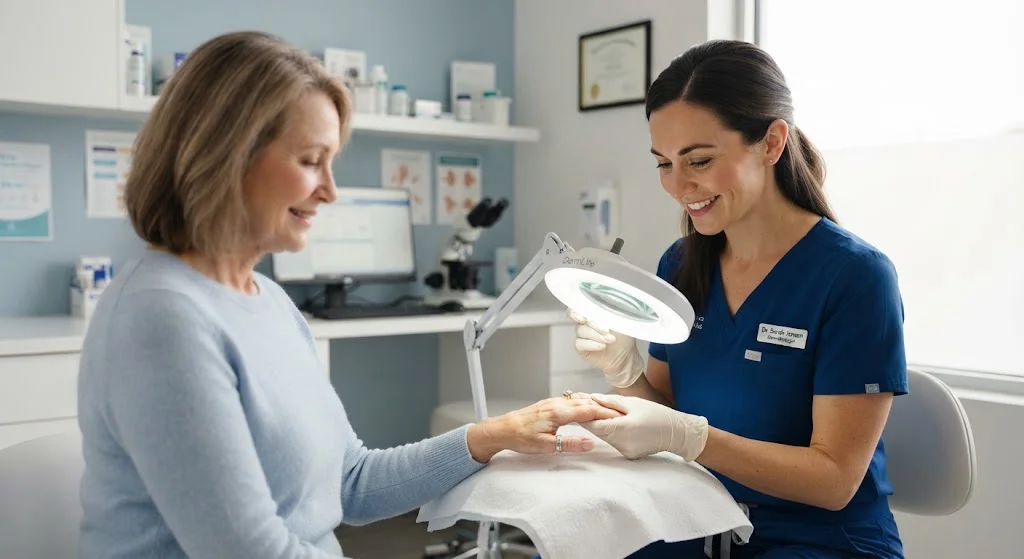
A professional can tell you whether you are dealing with simple surface damage or an underlying nail condition.
The bottom line: let your nails heal
How to Repair Nails After Acrylics is a slow process, not a quick fix. Your nails may feel weak today, but that does not mean they are ruined. Hydrate daily, protect them from wear, look after your cuticles and give them a real break, and they will grow back stronger, smoother and healthier.
Have you recovered your nails after acrylics? Tell us what worked for you in the comments.
How do you fix your nails after removing acrylics?
Keep them short, hydrate daily with cuticle oil and moisturizer, protect them from water and chemicals, avoid peeling or heavy buffing, and skip new enhancements until they have strengthened.
How long does it take nails to recover after acrylics?
Less dryness and peeling within a few weeks. Fingernails grow about 3 mm a month, so full replacement of the damaged nail takes roughly four to six months. Toenails take longer.
Can damaged nails grow back healthy after acrylics?
Yes. In most cases the nail matrix is unharmed, so new nail grows out healthy when you protect it and keep it hydrated.
Should I use cuticle oil after acrylic removal?
Yes. Daily cuticle oil keeps the nail and surrounding skin flexible, which cuts down on peeling, cracking and breakage.
Can I get acrylics again right after removal?
It is best to wait. Re-applying immediately hides the damage but slows recovery. If your nails are lifting, painful or very thin, wait until they have fully healed. Giving your natural nails a break between sets is a good habit.
How do I make my nails thicker after acrylics?
Trim them short, moisturize daily, avoid harsh chemicals and tools on the nail surface, and use a gentle strengthener if they still feel soft. Thickness returns as healthy new nail grows out.