How to Remove Acrylic Nails at Home: 7 Safe Steps
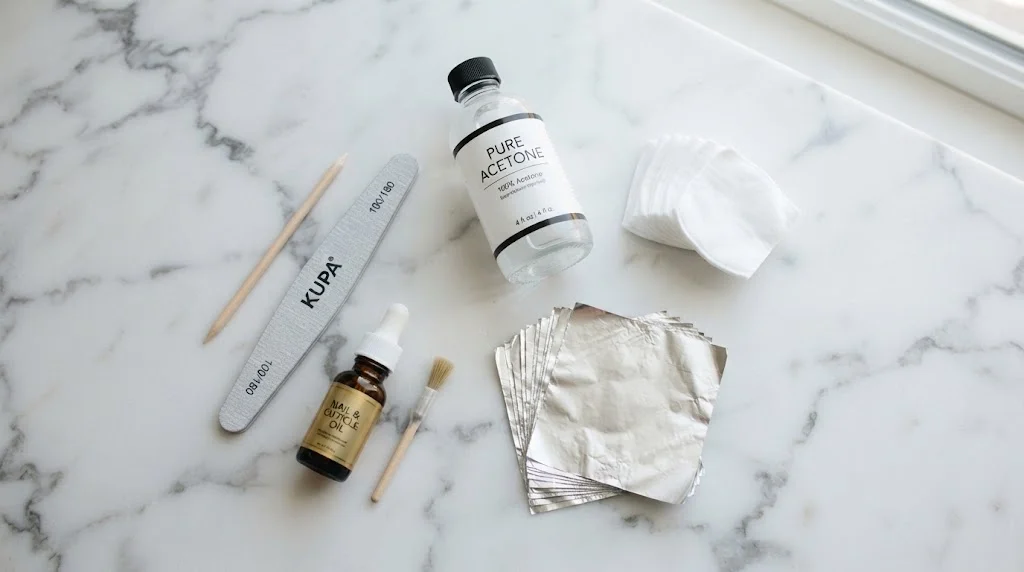
Short answer: How to Remove Acrylic Nails at home, trim the length, file off the glossy top layer, soak the nails in pure acetone using cotton and foil, gently push off the softened product, and finish with cuticle oil and moisturizer. Never peel or pry acrylics off, because that can tear layers of your natural nail.
How to Remove Acrylic Nails is simple, but it is not quick. The urge to pick at a lifted edge or file everything off in a rush is where most nail damage starts. With the right supplies and a little patience, you can How to Remove Acrylic Nails at home and keep your natural nails healthy.
This guide covers the step-by-step method, how acetone works, what to do when acrylic won’t budge, and the aftercare that helps your nails recover.
Key Takeaways
- Never pull, peel or pry acrylic away from the natural nail.
- Trim the acrylic first so there’s less product to dissolve.
- Filing off the shiny top layer lets acetone penetrate faster.
- The cotton-and-foil method keeps acetone in contact with the nail.
- If the acrylic resists, re-soak it instead of scraping.
- Moisturize your nails and cuticles afterward, because acetone is drying.
- Choose professional removal if the product is very thick or you feel pain.
Can You Remove Acrylic Nails at Home?
Yes, in most cases. is not a sticker, so it can’t simply be peeled away. Instead, you shorten it, thin it, soften it with acetone and gently How to Remove Acrylic Nails what has loosened. Rushing the process by scraping, cutting or prying is what damages the nail.
Stop and seek help if you have severe pain, bleeding, swelling or a visible injury under the nail.
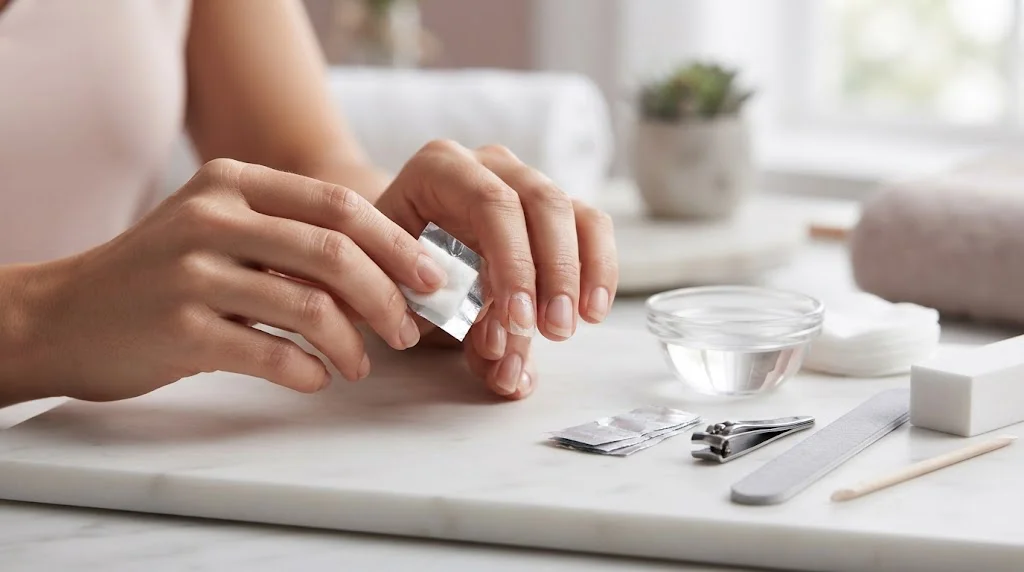
What You’ll Need
| Supply | Purpose |
| Pure acetone | Softens the acrylic |
| Nail clippers | Shortens the acrylic |
| Coarse nail file | Removes the glossy layer and reduces bulk |
| Fine nail file | Smooths leftover residue |
| Cotton balls or pads | Holds acetone against the nail |
| Aluminum foil | Wraps the cotton in place |
| Orangewood stick | Gently pushes off softened product |
| Nail buffer | Smooths the surface if needed |
| Petroleum jelly | Protects the surrounding skin |
| Cuticle oil and hand moisturizer | Rehydrates after removal |
Safety first: Work in a well-ventilated space. Keep acetone away from flames and heat, and avoid contact with your eyes and mouth. Be extra careful if the skin around your nails is irritated or broken.
How to Remove Acrylic Nails at Home: 7 Steps
Step 1: Trim the acrylic
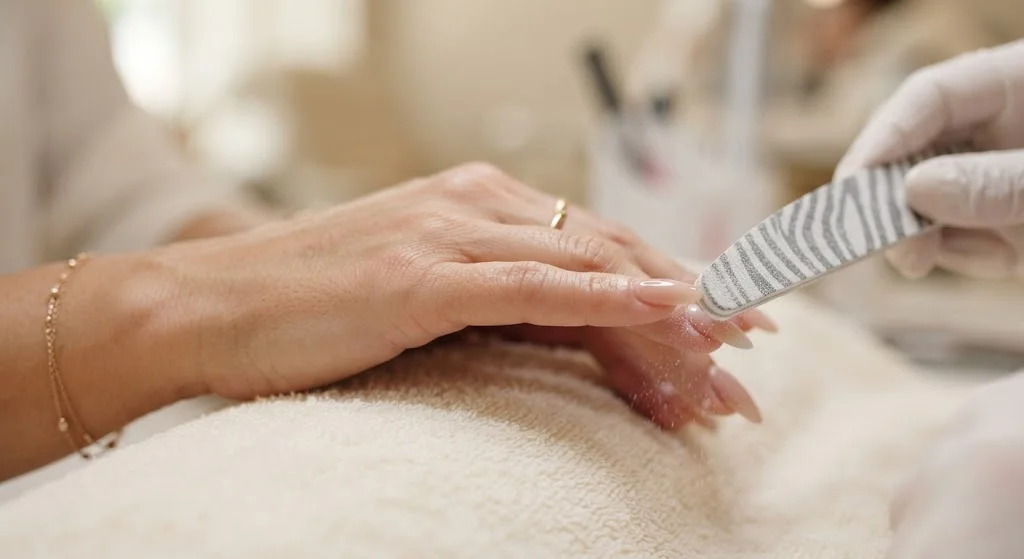
Use nail clippers to cut off as much excess length as you comfortably can. Shorter nails mean less product to dissolve. Clip in small sections, and never use clippers to force off thick acrylic. If you can’t tell where the acrylic ends and your natural nail begins, leave a little extra length.
Step 2: File off the shiny top layer
Using a coarse file, remove the gloss and thin the surface of the acrylic. You are not trying to file down to your natural nail. You are breaking the seal so acetone can get in. Check often, and ease off as soon as you get near the natural nail.
Step 3: Protect your skin
Apply a thin layer of petroleum jelly around each nail, keeping it off the acrylic itself. This helps prevent dryness and irritation.
Step 4: Soak the acrylic in acetone
Soak a cotton piece in pure acetone and place it directly on the nail. Wrap the fingertip in a small piece of foil to hold it in place. Repeat on every nail.
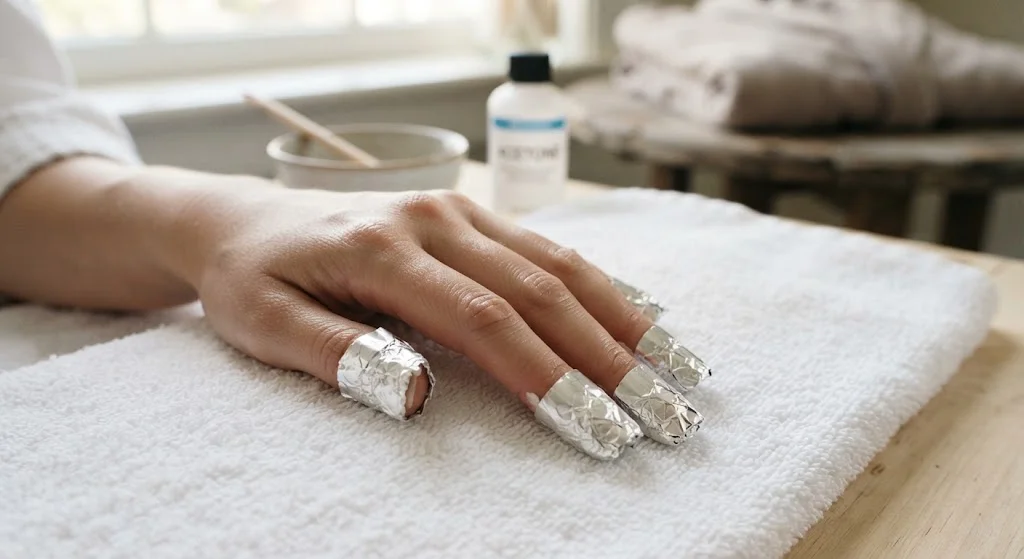
How long should you soak acrylic nails? There’s no single answer, since it depends on thickness, product type and how much you filed. Start by checking after about 15 to 20 minutes and keep going until the acrylic looks soft or crumbly. If it’s still hard, rewrap and wait longer.
Step 5: Gently push off the softened acrylic
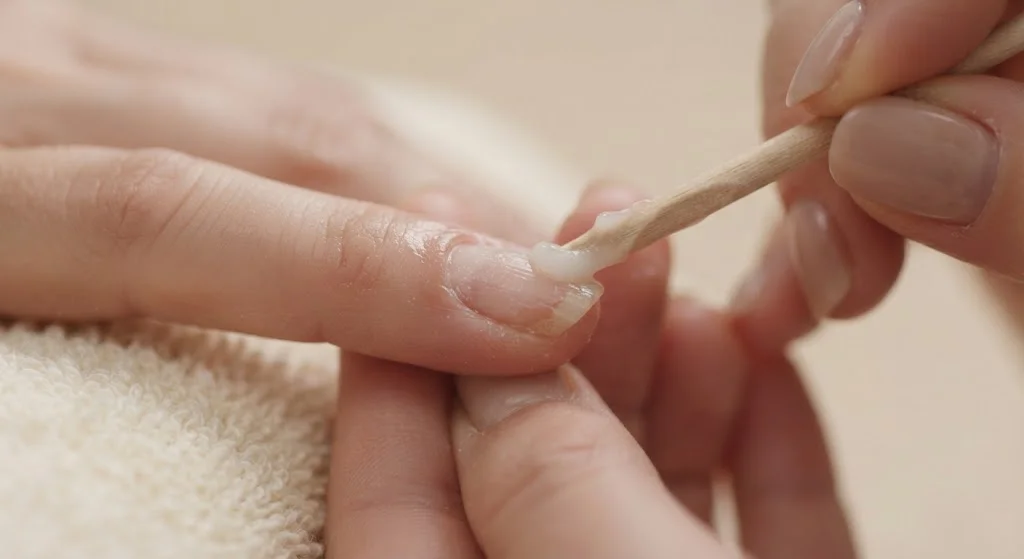
Unwrap one nail at a time. Use an orangewood stick to nudge the softened product off. It should move easily. If you feel resistance, don’t dig or lever it up. Re-wrap with fresh acetone and soak longer.
Step 6: Remove leftover residue
You may be left with a thin film or small patches. If needed, use a fine file very lightly, and avoid working the same spot repeatedly. If you can’t tell whether you’re touching acrylic or your natural nail, stop filing and take a closer look. Your nails don’t need to look perfect on day one.
Step 7: Hydrate and protect
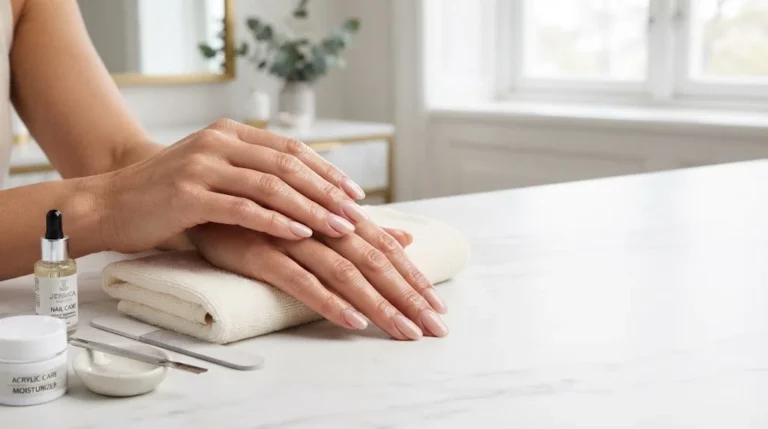
Wash and dry your hands, then massage cuticle oil into the nails and surrounding skin. Follow with hand cream. Acetone dries out skin, so moisturizing is part of the process, not an optional extra.
How to Remove Acrylic Nails Without Damaging Your Natural Nails
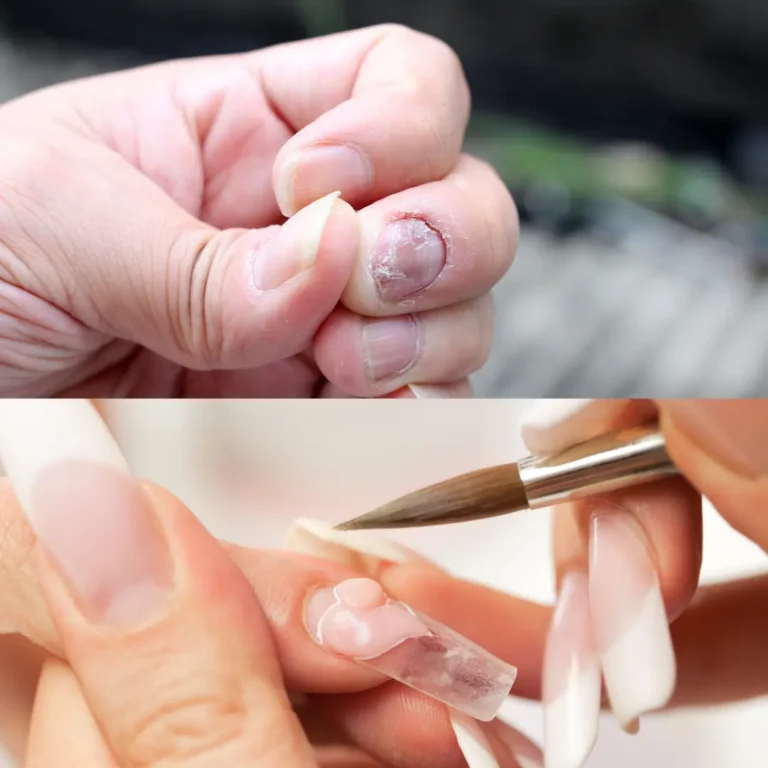
- Don’t peel. Even if an edge has lifted, pulling takes natural nail layers with it.
- Don’t force it. If acrylic won’t slide off, it needs more soak time.
- Don’t scrape the natural nail chasing every last trace.
- Don’t over-file. Your natural nail is far thinner than acrylic.
- Go slowly. Slow removal gives you control and prevents damage.
Can You Remove Acrylic Nails Without Acetone?
Not easily. No household remedy dissolves acrylic instantly and safely. Without acetone, you’d rely mainly on filing, which carries a much higher risk of thinning or damaging your natural nail, especially on thick sets. For beginners, professional removal is usually the safer non-acetone route.
Is Regular Nail Polish Remover the Same as Acetone?
No. Many polish removers are acetone-free or diluted and may not soften acrylic effectively. For How to Remove Acrylic Nails, use pure acetone, and always follow the label directions.
Why Won’t My Acrylic Nails Come Off?
- The acrylic is too thick, so file off more bulk and re-soak.
- The cotton dried out, so replace it with freshly soaked cotton.
- It needs more time, since some sets are slow to soften.
- The glossy layer wasn’t removed, so acetone couldn’t penetrate.
Never push or pry under stubborn acrylic. Re-soak it instead.
Common Acrylic Removal Mistakes
| Mistake | Do this instead |
| Peeling off lifted acrylic | Trim, file and soak it off |
| Skipping the filing step | Remove the gloss and bulk first |
| Scraping hard acrylic | Re-soak until it softens |
| Over-filing the natural nail | Use light pressure and stop at the natural nail |
| Skipping aftercare | Apply cuticle oil and moisturizer right away |
Acetone Soak vs. Filing vs. Professional Removal
| Method | Main advantage | Main concern |
| Acetone soak | Softens acrylic for easy removal | Can dry the skin |
| Cotton and foil | Keeps acetone on the nail | Takes patience |
| Filing | Reduces thickness | Over-filing can damage the nail |
| Professional removal | Technician assesses and removes safely | Requires a salon visit |
How Should Your Nails Look After Acrylic Removal?
Expect them to look dry, thin or slightly uneven, with dry skin around them. That’s normal. Keep them clean, apply cuticle oil daily, moisturize your hands, avoid picking at leftover product, and keep brittle nails short. Give your nails time to recover before applying another enhancement.
See a doctor if you notice persistent discoloration, swelling or other worrying changes.
When to Get Acrylics Removed Professionally
Book a nail technician if:
- The acrylic is extremely thick.
- You can’t tell where the acrylic ends and your natural nail begins.
- The product won’t soften after repeated soaks.
- There’s heavy lifting and you’re worried about what’s underneath.
- You feel tempted to pry it off.
- Your nail is painful or injured.
- You don’t feel confident doing it yourself.
Myths vs. Facts
| Myth | Fact |
| Acrylics can be ripped off easily | Pulling stresses and can tear the natural nail |
| More force means faster removal | If it resists, soften it further instead |
| You must remove every last bit right away | Preserving the natural nail matters more than a perfect finish |
| Acetone removes acrylic instantly | It dissolves acrylic, but timing depends on thickness and product |
| The fastest method is the best | The safest method is the best |
Final Thoughts
How to Remove Acrylic Nails safely is less about speed and more about patience. Trim the length, thin the surface, let acetone soften what’s left, and remove it gently. If a stubborn patch won’t budge, soak it again rather than pulling or scraping. Then give your hands and cuticles the moisture they need.
If the set won’t come off, or your nails are painful or damaged, professional removal is the safest choice.
Have you removed acrylics at home? Share your tips in the comments below.
How do I remove acrylic nails at home?
Trim the acrylic, file off the shiny top layer, soak with acetone-soaked cotton wrapped in foil, gently push off the softened product, and re-soak if needed. Moisturize afterward.
How long does it take to soak off acrylic nails?
It varies by product and thickness. Check after 15 to 20 minutes and keep soaking if the acrylic is still hard.
How do I remove acrylic nails that are lifting?
Don’t peel them. Trim, file and soak as usual. Pulling a lifted edge can tear the natural nail.
How do I remove thick acrylic nails?
Reduce the thickness with a coarse file first, then soak in acetone. Don’t try to file all of it off.
What should I put on my nails after removing acrylics?
Cuticle oil and hand moisturizer. Acetone is drying, so rehydrate daily.
Can I remove acrylic nails without damaging my natural nails?
Yes, by avoiding peeling, prying, hard scraping and over-filing, and by letting acetone do the work.
Can I remove acrylic nails without acetone?
Acetone is generally the most effective option for softening acrylic. Without it, removal usually takes longer and may require more filing, which can increase the risk of over-filing the natural nail.
How often can I remove acrylic nails at home?
There is no fixed schedule for removal. Give your natural nails time to recover between sets and avoid repeated aggressive filing or picking during removal.